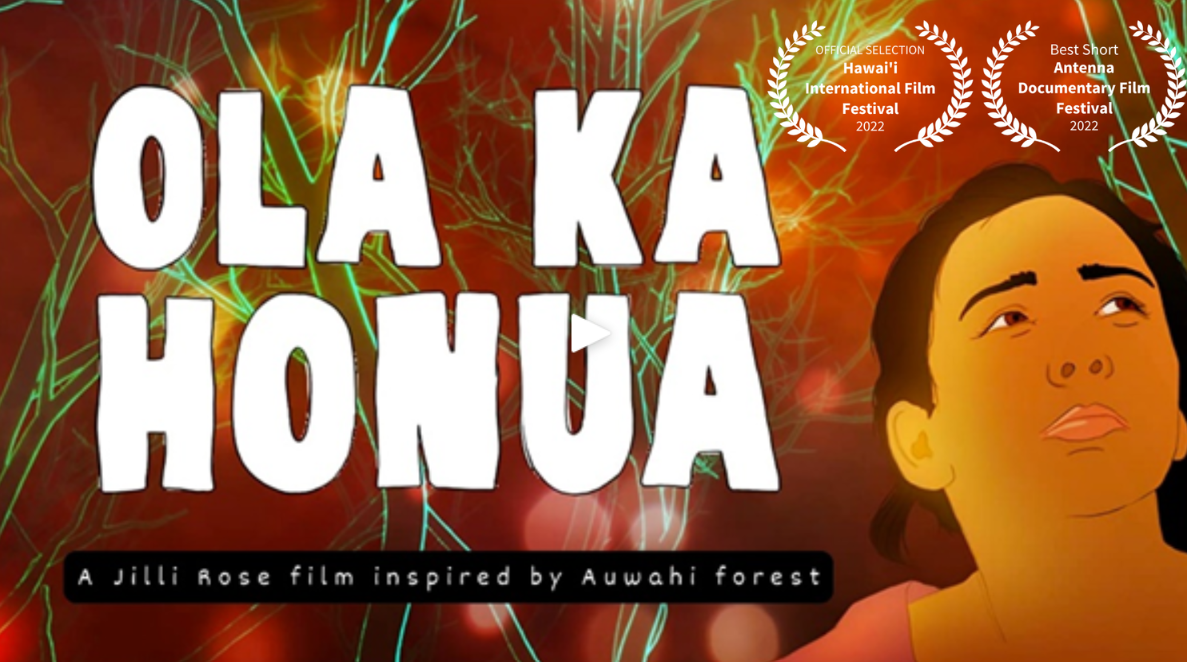
Description: This resource combines an informational webpage with the approximately 22-minute animated documentary Ola Ka Honua. The film recounts the decline of Hawaiʻi’s native forests and follows the community-led restoration of Auwahi, a dry forest on the leeward side of Haleakalā. It shows how volunteers, conservation workers, and ʻUlupalakua Ranch helped transform remnant “museum forest” trees in pastureland into a regenerating native forest.
The page also explains the ecological and cultural importance of Hawaiian watershed forests. These forests collect, filter, and store freshwater; provide habitat for native plants, birds, snails, and insects; and are connected to wao akua, Hawaiian cosmology, and ethnobotany.