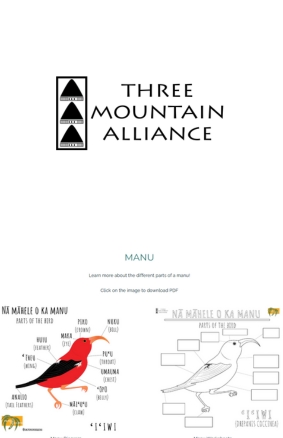
This engaging activity features a labeled diagram and worksheets that teach the parts of a bird (nā māhele o ka manu) in both ʻōlelo Hawaiʻi and English. The focus species is the native ʻiʻiwi (Drepanis coccinea), making it culturally relevant and visually appealing for learners. The guide aims to build observational and identification skills essential for bird and ecosystem understanding.

Labeling practice: Fill in parts like piko (crown), nuku (bill), ʻēheu (wing), analio (tail feathers), māi‘u‘u (claw), and more.
Color-coded diagram: Students color the ʻiʻiwi using a guide to reinforce plumage patterns.
Guided reflection: Includes prompts about how bird anatomy helps with ID, behavior interpretation, and ecological roles.
Field extension: Learners apply these terms during real-world bird observation using binoculars, checklists, or iNaturalist/eBird submission.
Bird anatomy and morphology in Hawaiian and English
Field identification strategies using anatomical features
Language integration & cultural relevance (kīlo manu practice)
Citizen science engagement in bird observation and monitoring