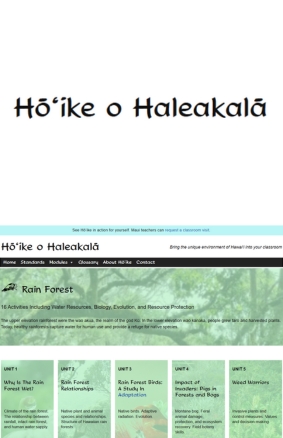
The Hōʻike o Haleakalā “Rain Forest” module is a rich, place-based educational resource offering five comprehensive units that explore Maui’s montane rain forests through scientific, cultural, and ecological lenses. Each unit supports NGSS-aligned learning and combines classroom, field, and hands-on activities to deepen understanding of ecosystem function and stewardship.

Why Is The Rain Forest Wet?
Investigate rainfall patterns, trade-wind climatology, and forest water budgets (e.g., Puʻu Kukui receives over 80 in/year).
Activities include climate mapping, rainfall simulation, and drawing water-budgets.
Rain Forest Relationships
Explore plant-animal interactions through species research, presentations, and a forest slide-show/discussion prompt lineup.
Rain Forest Birds: A Study in Adaptation
Investigate honeycreeper adaptive radiation. Includes games, research projects, and evolutionary concept exploration.
Impact of Invaders: Pigs in Forests and Bogs
Study effects of invasive mammals (e.g., pigs) on bog ecosystems. Activities include slide-show reflection and data-analysis exercises.
Weed Warriors
Examine invasive plant characteristics through role-plays, case studies (e.g., Kāhili ginger), and ecological ethics inquiry
Trade-wind climatology & hydrology of Hawaiian rain forests
Montane bogs, ecosystem vulnerability, and restoration challenges
Evolutionary biology through Hawaiian honeycreepers
Invasive species dynamics and management ethics