Screenshot 2026-06-07 223946
Resource Title: Hawaiʻi’s Native Bees (Nalo Meli Maoli) | University of Hawai'i at Mānoa
Organization: University of Hawaiʻi at Mānoa
Description:

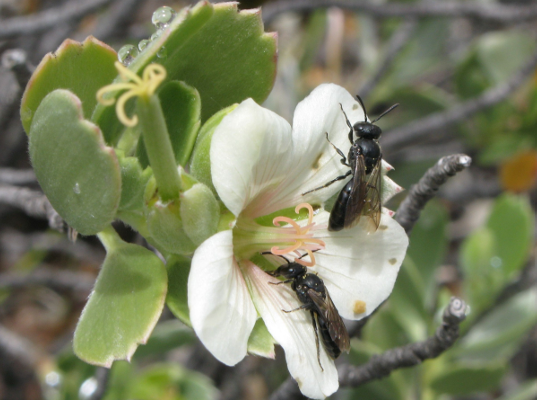
This resource is a short illustrated article about Hawaiʻi’s native yellow-faced bees, or Hylaeus, and their ecological importance as pollinators. It explains how Hawaiʻi’s native bees evolved from a single colonizing lineage into dozens of endemic species, describes the habitats and native plants they pollinate, and outlines the major threats they face from habitat change, invasive species, and introduced competitors. It works well as a reading resource for pollinator ecology, native species, and conservation in Hawaiʻi.

Target Audience: 6th - 12th grade, 6th - 8th grade, 6th grade and above, 7th - 12th grade, Adult Education, Educators, Facilitators, High School, College
Instructional Roles: Enrichment, Main lesson, Planning
Environment: Classroom, Self-guided
Content Type: Publications, STEM investigation
Type Of Engagement: Investigate, Observe, Reflect
Format: Images, PDF Guide
Activity:

Native Bee Pollinator Investigation
Students read the article to learn how Hawaiʻi’s native Hylaeus bees evolved, what native plants they pollinate, and how invasive species and habitat change affect their survival. The resource can support discussion, note-taking, pollinator comparison, or a research activity on native bee conservation in Hawaiʻi.

Topics Covered:
  • Hawaiian native bees and Hylaeus diversity
  • Endemism and island evolution
  • Pollination ecology in Hawaiʻi
  • Native plant-bee relationships
  • Cuckoo bees and bee life history
  • Habitat range from coast to alpine ecosystems
  • Invasive species impacts on native pollinators
  • Conservation challenges and species recovery

Have a question, found an issue, or just want to connect?
Reach out to us anytime. We're here to help.