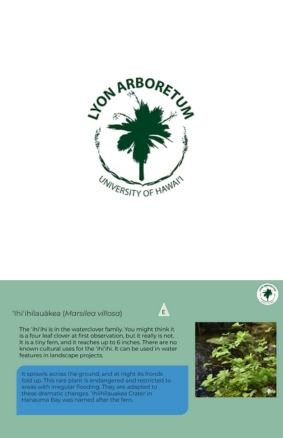
This Google Slides presentation by Lyon Arboretum is a visually rich and student-friendly introduction to plant classifications in Hawaiʻi. It explains the differences between endemic, indigenous, and non-native species through clear definitions, vibrant photos, and real examples like koa, hala, palapalai, and ʻulu. Designed for in-class or virtual instruction, the resource builds ecological literacy and cultural awareness through a local lens.
Classify native and non-native plants based on traits and place of origin using embedded icons (E, I, N).
Discuss or journal on how certain plants arrived in Hawaiʻi and their roles in ecosystems or daily life.
Create a student slide deck featuring plants from their schoolyard or community, using the same format.
Use the presentation as a launchpad for science or cultural projects, like building native gardens or studying traditional uses of plants.
Hawaiʻi-specific definitions: endemic vs. indigenous vs. introduced
Plant ecology and classification
Cultural practices and traditional uses (e.g., Kī in ceremony, Kalo in agriculture)
Species identification through visuals and text
Biodiversity and conservation concepts
Human migration and biocultural exchange