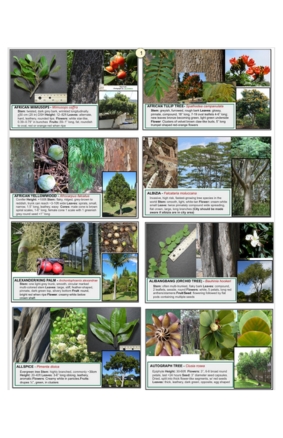
This downloadable guide from DLNR’s Kaulunani Urban & Community Forestry Program is designed for citizen foresters across Hawaiʻi. It provides identification characteristics, ecological roles, and planting advice for native and non-native trees found in Hawaiian urban and community settings—covering species from ʻōhiʻa and koa to ironwood and coconut palm.

ʻŌhiʻa Health Monitoring Project
Using the ID guide, students identify ʻōhiʻa (Metrosideros polymorpha) on campus or in their ʻāina.
Monitor trees monthly for signs of Rapid ‘Ōhiʻa Death (ROD), and record measurements and tree health data.
Tree Canopy Mapping Assignment
In small groups, map tree species using the guide in places like schoolyards or neighborhood parks.
Use the Kaulunani-provided TreePlotter tool to calculate canopy cover and list species, categorizing them as native or non-native.
Native vs. Non-Native Case Study
Students select two species—for example, native koa vs. invasive ironwood—and research their ecological impacts, economic value, and cultural significance in Hawaiʻi.
Present findings via posters or interactive slides.
Planting the Right Tree Workshop
Build a lesson around DLNR/HECO’s “Planting the Right Tree in the Right Place” practices.
Students choose appropriate tree species for different Hawaiʻi landscapes (coastal, lowland, upland) and justify choices based on ecological and cultural values.
Citizen Forester Field Training Simulation
Simulate a Kaulunani training: train students to measure trunk diameter, assess tree condition, and enter data, mirroring state-certified citizen forester protocols
Urban/community forestry in Hawaiʻi & canopy management
Tree species identification and classification
Ecological value: carbon sequestration, air-quality, shade, watershed protection
Threats to forest health: invasive species, ROD, droughts
Cultural significance: ʻŌhiʻa, koa, māmane, kōlea
Citizen science skills: inventory mapping, data collection, monitoring