This collection from Three Mountain Alliance’s ʻImi Pono no ka ʻĀina program offers Hawaiʻi-focused art-based educational activities. Featuring two main modules—Lau Kāpala (Plant Stamping) and Native Species Masks—these resources use native plant materials and cultural heritage to teach communities about native ecosystems and Lōkahi (balance) within Hawaiʻi Volcanoes watershed areas.
Lau Kāpala: Plant Stamping on Fabric
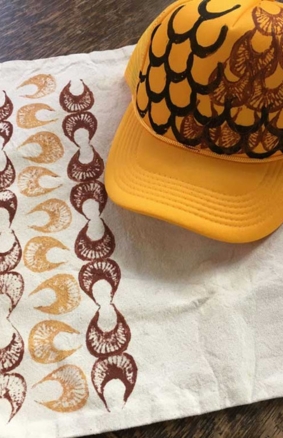
Using instructions and templates, students collect leaves from approved native (and non-toxic) plants—like kalo, maiʻa, laʻi—to create stamps for fabrics such as bags or shirts.
They design geometric patterns inspired by natural motifs (e.g., mauna = triangle, ocean currents = parallel lines) and explain cultural and ecological symbolism.
Native Species Masks
Students craft wearable masks representing native species tied to Hawaiʻi’s watershed areas (mauka to makai). This encourages deeper connection to local flora and fauna and their roles in ecosystem health.
Kilo Design Reflection
Encourage students to apply “kilo” (observational mindfulness) to notice shapes, textures, and patterns in plant life, then abstract these into art.
Students sketch multiple designs, choose one, and write about how design choices reflect their personal connection to place.
ʻĀina & Art Exhibition Event
Mirror the community-driven Hawaiʻi Nei model by organizing a showcase for student artworks celebrating native species. Invite ʻohana to engage with student perspectives on ecosystem stewardship.
Cultural arts integration: hana noʻeau & kīpuka-based design
Observation and representation of native plant morphology
Connection of art to ecological concepts in Hawaiʻi’s watersheds
Environmental stewardship through creative expression
Community engagement via student-led exhibitions
Reinforcement of Hawaiian language and place-based identity