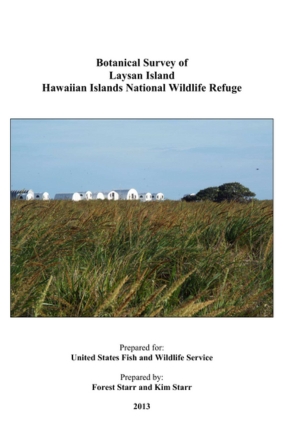
This 61-page unpublished report by Forest and Kim Starr (September 10–18, 2013) offers a comprehensive botanical inventory of Laysan Island. Employing walk-through survey methods, the authors document native and invasive vascular plants, note conservation concerns like past rabbit-induced habitat loss, and provide detailed appendices outlining species distributions across the island. The report supports conservation efforts by U.S. Fish and Wildlife Service in the Northwestern Hawaiian Islands.
Local Botanical Walk‑Through & Cataloguing
Organize a field trip where students use checklists to record native vs. non-native plant species.
Incorporate methods from the Laysan report—like mapping distribution along trails and noting habitat types.
Historical Ecology Role‑play
Recreate the rabbit introduction and eradication scenario: students assume roles (e.g., wildlife manager, invasive species advocate) and debate management decisions.
Model ecosystem outcomes with and without rabbit impacts.
Species Vulnerability Mapping
Have students map which plant species may be vulnerable to threats like sea‑level rise or invasive pests.
Compare with Laysan inventory, and then assess similar risk for local ecosystems (e.g., wetland parks).
Invasive Species Action Plan
Based on Laysan’s plant threats, students design an invasive species prevention campaign for their school grounds: sampling, removal methods, and native plant replacement strategy.
Digital Field Guide Creation
Students choose a subset of Laysan’s plant species (e.g., Ipomoea pes-caprae, Eragrostis variabilis), research them, and develop an interactive digital guide—complete with ID tips, habitat photos, and conservation notes.
Vascular plant taxonomy & identification
Survey techniques: walk-through transects, mapping, species checklists
Island biogeography & restoration ecology
Invasive species biology & eradication impacts
Conservation planning: risk assessment, ecosystem resilience